The Rise (and Reality) of HOA Facebook Groups
HOA communication used to be simple. Post a notice. Send an email. Maybe mail a letter. Then came social media—and everything got louder.
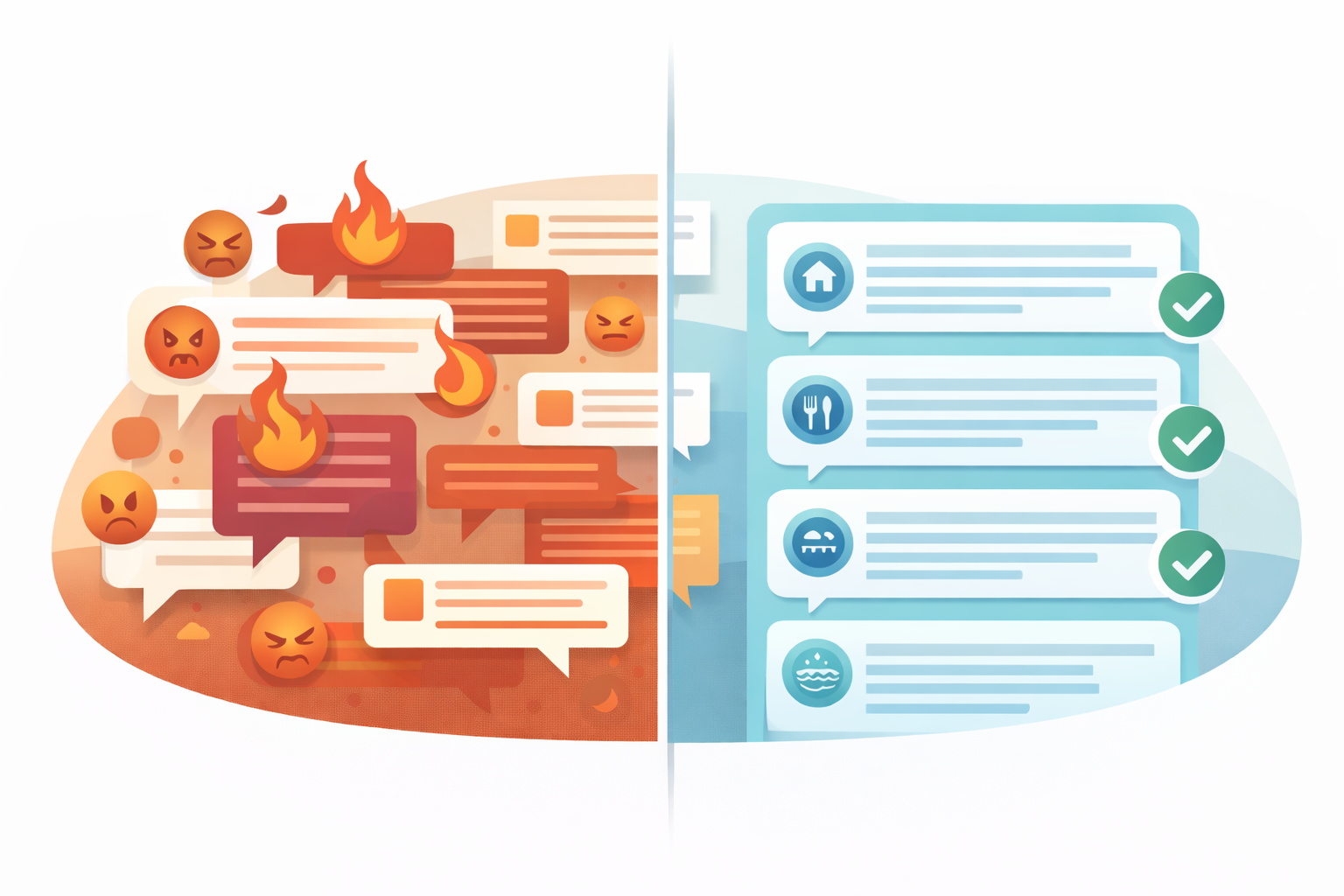
What started as a convenient way to connect residents has, for many communities, turned into something else entirely:
- Misinformation spreading quickly
- Heated arguments in comment threads
- Residents bypassing official channels
- Boards losing control of the narrative
And now, more HOAs are asking the same question: Is Facebook actually helping—or hurting—our community?
At first glance, Facebook groups seem like a perfect fit: easy to set up, familiar to residents, real-time interaction. But in practice, they introduce a fundamental problem: they're not built for governance—they're built for engagement. And those are not the same thing.
Key tension: Studies show that misinformation spreads significantly faster on social media than factual information, often amplified by emotional or controversial content. In an HOA setting, that creates a dangerous dynamic where a rumor about dues increases spreads before facts are clarified.
Why Social Media Breaks Down in HOA Environments
The issue isn't just misinformation—it's structure. Facebook groups lack the controls and accountability HOAs require.
No Verification of Residents
Anyone can join, use a different name, or share incomplete information. Conversations often include former residents, renters without full context, and anonymous profiles.
Conversations Spiral Quickly
Social platforms are designed to drive engagement—especially emotional engagement. Public complaints, reactive comments, and escalating arguments get amplified algorithmically.
Critical Information Gets Lost
Policy changes, maintenance schedules, and emergency notices get buried under complaints, off-topic posts, and repetitive questions. Residents miss key updates—not because they weren't shared, but because they weren't structured.
No Single Source of Truth
When communication happens across Facebook, email, paper notices, and word-of-mouth simultaneously, residents are left wondering: "Is this official? Is this accurate? Did I miss something?"
That uncertainty erodes trust over time. A study by Pew Research shows that negative interactions online tend to generate more engagement and visibility, which fuels further conflict. In other words: the louder the conflict, the more it spreads.
What Residents Actually Want
Despite the noise, most residents want the same things:
- Clear, accurate information
- Timely updates
- Easy access to what matters
- A way to stay informed without the drama
And increasingly, they don't want it on social media. In fact, surveys by Edelman show growing concern around privacy, misinformation, and toxicity on social platforms, leading users to seek more controlled, purpose-built environments for communication.
The opportunity: Residents are already looking for a better alternative. Forward-thinking HOAs that provide one see immediate improvements in engagement quality—and a significant reduction in conflict.
The Shift: Verified Community Feeds
Forward-thinking HOAs are moving away from social media groups and toward verified, platform-based community feeds. These are built specifically for HOA communication—and it shows.
What Makes Verified Feeds Different
-
✓
Resident Verification = Real Accountability. Every user is linked to a property, verified within the system, and accountable for their activity. No anonymous posts. No outside noise. Just real residents, having real conversations.
-
✓
Structured, Organized Communication. Instead of chaotic threads, communication is categorized, searchable, and easy to navigate. Important updates stay visible. Residents can quickly find what they need—without scrolling through drama.
-
✓
Controlled Engagement (Without Killing It). Verified feeds allow interaction, but within boundaries. Comments can be moderated, discussions stay on-topic, and escalation is managed—not amplified. This creates fewer conflicts and more productive conversations.
-
✓
One Source of Truth. All communication—announcements, documents, updates, discussions—lives in one place. No confusion. No contradictions. When it's posted, it's official.
-
✓
Built for HOAs—Not Algorithms. Unlike social media, these platforms aren't driven by engagement metrics. They're designed for clarity, transparency, and efficiency—exactly what HOA communication requires.
The Impact: Better Engagement, Less Noise
When HOAs switch to verified community feeds, the shift is immediate:
- Higher engagement with official updates
- Fewer repetitive questions
- Reduced conflict and misinformation
- Increased trust between residents and boards
Because the environment changes. From reactive to structured. From emotional to informative. From chaotic to controlled.
This Isn't About Limiting Voices
It's about improving the conversation. Residents still share feedback, ask questions, and engage with their community. But now it happens in a space designed for clarity—not conflict.
When the conversation improves, the community does too.
Meet HOAFlux
Community engagement—without the chaos. HOAFlux replaces fragmented, social-media-driven communication with a verified, centralized platform:
- Resident-verified community feeds
- Structured announcements and updates
- Moderated discussions that stay productive
- Real-time notifications across channels
- A single source of truth for your entire HOA
Stop Managing Facebook Drama
Social media wasn't designed for HOA governance. Verified community platforms don't just improve communication—they restore control, clarity, and trust.
See HOAFlux in Action Today